Gold vs silver: which bullion to buy?
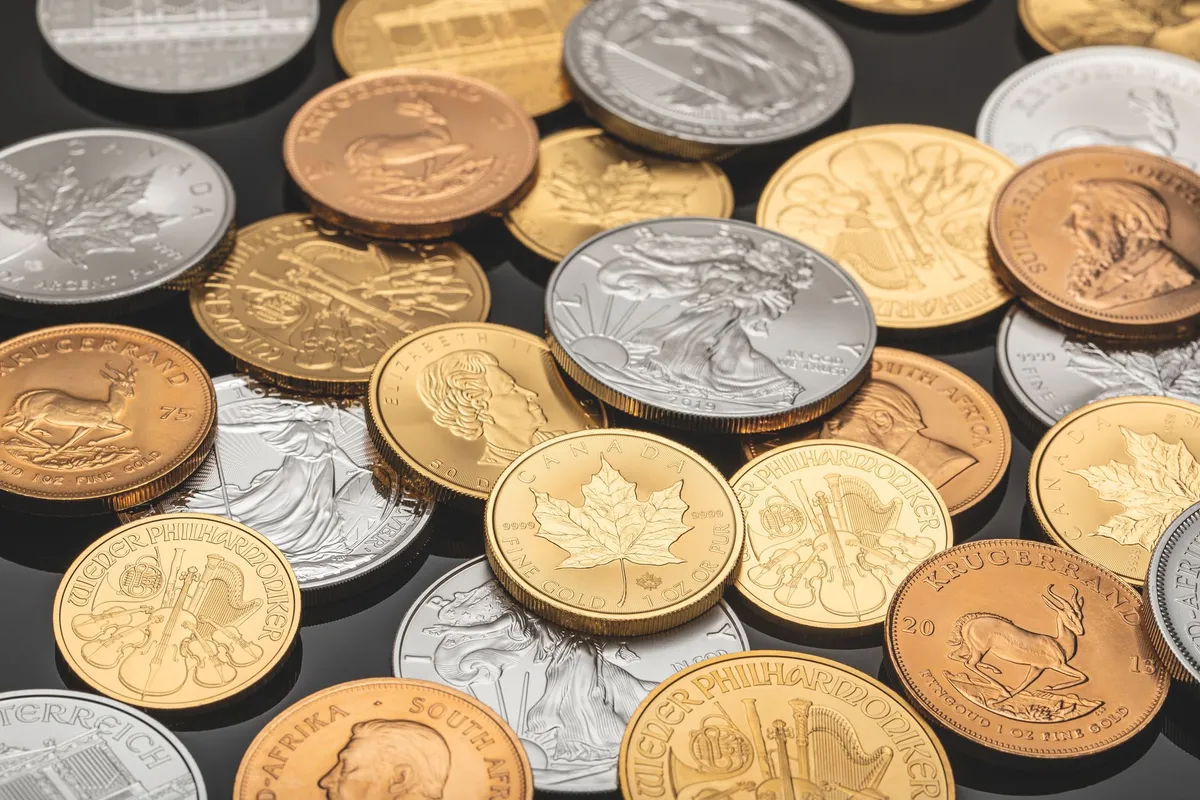
Gold and silver are often bought side by side, yet they behave very differently once they are in your safe. One packs a great deal of value into a small space and moves relatively calmly; the other is cheap per ounce, bulky, and swings harder. Neither is “better” in general. This guide sets out what each metal does well, explains the gold/silver ratio, and compares the two on the points that matter in practice.
What gold does well
- High value density. A single kilobar of gold represents a sum that would take a large pile of silver to match. That makes gold easy to store, insure and move.
- Monetary role. Central banks hold gold in their reserves, and the wholesale market is deep and liquid. Bars from accredited refiners are accepted by dealers almost everywhere.
- Relatively lower volatility. Gold’s price moves, sometimes sharply, but its percentage swings are usually smaller than silver’s over the same period.
- Low premiums on larger sizes. From 100 g upward, cast gold bars sell close to the metal value.
- Tax treatment in Europe. Investment gold is exempt from VAT in the EU and the UK.
What silver does well
- Small entry ticket. A single ounce of silver costs a small fraction of an ounce of gold, so it is easy to buy in small amounts and to sell a little at a time.
- Industrial demand. Silver is used in electronics, solar panels, brazing alloys and many chemical and medical applications. That gives it a source of demand that gold largely lacks, and links its price to economic activity.
- Larger moves. Higher volatility cuts both ways, but some buyers deliberately hold silver because it tends to move more than gold in both directions.
- Divisibility. Holding many small units makes it simple to sell only part of a holding.
The gold/silver ratio
The gold/silver ratio is simply the price of one ounce of gold divided by the price of one ounce of silver. It tells you how many ounces of silver one ounce of gold would buy.
For example, with hypothetical prices of $2,000 for gold and $25 for silver (illustrative figures, not current prices), the ratio would be 2,000 ÷ 25 = 80.
The ratio has a long history. The US Coinage Act of 1792 fixed it by law at 15 to 1 for American coinage. Once metals were left to trade freely, the ratio became a market figure and has varied widely; in spring 2020 it rose above 100, meaning an ounce of gold bought more than a hundred ounces of silver.
Some holders watch the ratio to decide which metal to add to: when it is high, silver is cheap relative to gold, and when it is low, gold is cheap relative to silver. Keep in mind that the ratio has no fixed “normal” level that it must return to; it is a way of comparing the two prices, not a forecast.
Side-by-side comparison
| Criterion | Gold | Silver |
|---|---|---|
| Value density | Very high: a large sum fits in a pocket | Low: the same sum takes many times the weight and volume |
| Volatility | Moderate | Higher, often markedly |
| Premium over spot | Low on bars of 100 g and above | Higher in proportion, because fixed costs weigh more on a cheaper metal |
| VAT in the EU and UK | Investment gold exempt | Bars generally taxed at the standard rate |
| Storage | Small safe or vault box is enough | Needs more space; heavier to move and insure |
| Industrial demand | Limited share of total demand | Large share of total demand |
| Buy-back spread | Narrow on standard bars and coins | Usually wider in percentage terms |
The density point is easy to underestimate. Silver is not only worth less per ounce, it is also lighter per unit of volume (about 10.5 g/cm³ against about 19.3 g/cm³ for gold). At a ratio of 80, a sum held in silver weighs 80 times as much as the same sum in gold and takes up roughly 150 times the space.
Questions to ask yourself
Rather than a recommendation, here are the questions that usually decide the mix:
- How much are you putting in? Small, regular amounts are easier to place in silver or small gold coins; larger sums are cheaper per ounce in gold bars.
- Where will you keep it? If space or insurance is limited, gold’s density matters.
- Which taxes apply where you live? In the EU and UK, VAT on silver bars changes the break-even point considerably.
- How much volatility can you live with? Silver’s swings can be uncomfortable to watch.
- How will you sell? Check the buy-back spread for each product before buying, not after.
In short
Gold is the compact, lower-volatility, widely accepted store of value, with favorable tax treatment in Europe. Silver is the cheaper, more divisible metal with an industrial side, larger price swings and higher costs relative to its value. Many holders own both, in proportions that depend on their budget, their storage and their tolerance for price swings. The choice is personal, and nothing here is individual financial advice.
For details on each metal, see our guides to gold bullion prices, silver bullion prices, gold bars and silver bars.
This article may contain partner links. They never influence what we write.