Gold bullion prices: spot, benchmark and dealer prices explained
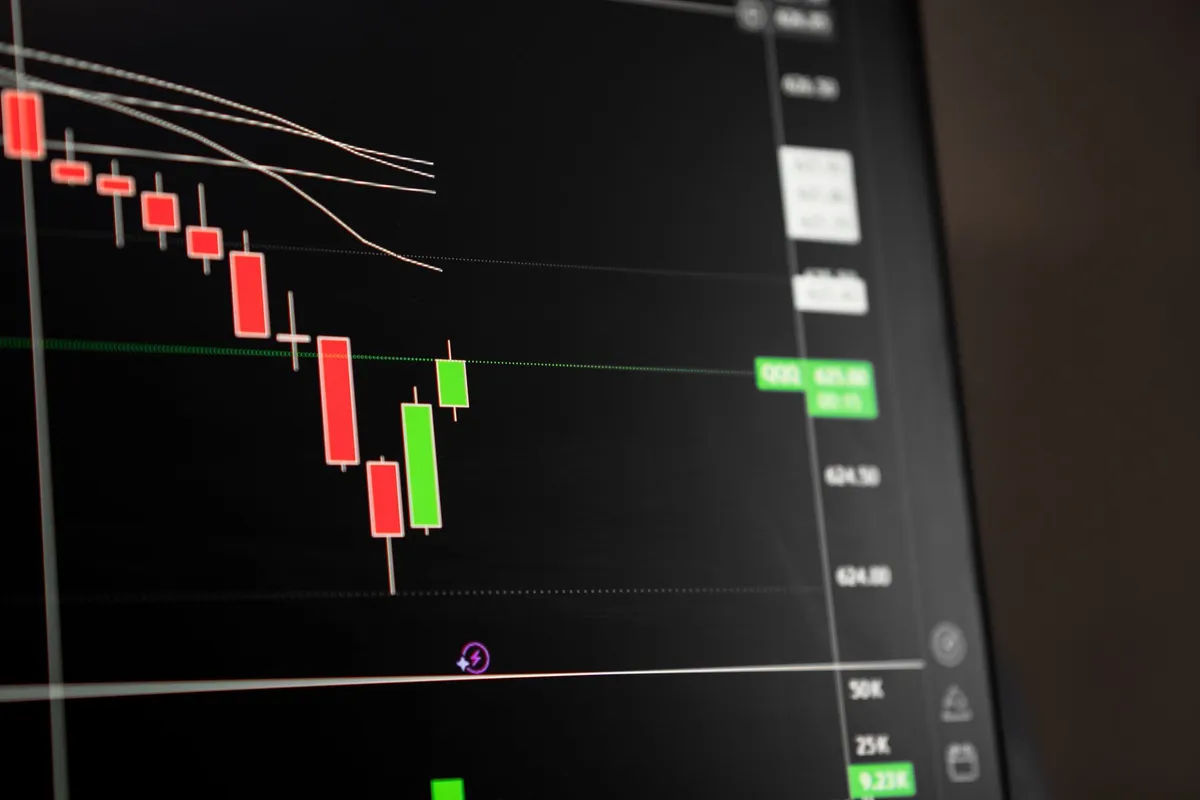
“The gold price” sounds like a single number, but at least three different prices hide behind it: the spot price that moves every second, the benchmark price set twice a day in London, and the price a dealer actually asks you to pay. This site does not run a live price feed, so instead of quoting a figure that would be stale by the time you read it, this guide explains where each price comes from and how to read it.
Spot price: the live wholesale market
The spot price is the price for gold delivered almost immediately, in large wholesale quantities. It is quoted in US dollars per troy ounce (1 troy oz = 31.1035 g), whatever country you live in, and then converted into other currencies.
Gold trades almost around the clock. The two main centers are:
- the London over-the-counter (OTC) market, where banks and dealers trade directly with each other, mostly for metal held in London vaults;
- futures exchanges such as COMEX in New York, where standardized contracts change hands and the nearest contract strongly influences the quoted spot.
Because trading moves from Asia to Europe to North America during the day, the spot price you see on a screen is a running estimate built from these markets. It always comes as two numbers: a bid (what buyers will pay) and an ask (what sellers want). The gap between them is the spread, and on the wholesale market it is very small.
Benchmark price: the LBMA Gold Price
A moving price is awkward for contracts, so the industry also needs a fixed reference. That reference is the LBMA Gold Price, set twice each London business day, at 10:30 and 15:00 London time, through an electronic auction in which participating banks match buy and sell orders until they balance.
Since 2015 it has been administered by ICE Benchmark Administration. It replaced the London gold fixing, a reference whose history goes back to 1919. Miners, central banks, refiners and dealers use it to value contracts and settle trades.
Dealer price: what you actually pay
When you buy a bar or a coin, the dealer starts from spot (or from the benchmark) and adds a premium. That premium covers manufacturing, shipping, insurance, the dealer’s own spread and profit. When you sell, the dealer pays you spot minus a discount.
| Price | Who sets it | When it changes | What it is used for |
|---|---|---|---|
| Spot | Wholesale OTC and futures trading | Continuously | Market reference, chart data |
| LBMA Gold Price | Auction run by ICE Benchmark Administration | Twice a day, 10:30 and 15:00 London | Contracts, valuations, settlement |
| Dealer price | Each dealer | Often several times a day | Retail purchases and buy-backs |
Reading a gold price chart
The same metal looks very different depending on the time window you choose. Each horizon answers a different question.
- 24 hours. Shows intraday noise: reactions to economic data, to the opening of London or New York, to currency moves. Useful only for timing a purchase you have already decided on, for example to avoid buying in the middle of a sharp spike.
- 30 days. Shows the short-term trend and whether the price is unusually high or low compared with recent weeks. Good for judging whether a dealer’s quote is in line with the market.
- 1 year. Smooths out daily swings and shows the direction of the market over a full cycle of seasons, interest-rate decisions and currency moves. A sensible window for anyone planning regular purchases.
- 10 years. Shows the long-run picture: multi-year rallies, long flat periods and deep corrections. This is the window to look at before deciding how large a share of savings gold should represent, because it shows how long a drawdown can last.
Two reading tips apply to every chart. First, check the currency: a chart in dollars and the same chart in euros or pounds can tell different stories, because the exchange rate moves too. Second, check the scale: a chart whose vertical axis starts far above zero makes small moves look dramatic.
Converting per ounce to per gram and per kilo
Retail products are often sold in grams, while the market quotes troy ounces. The conversion is simple once you remember that a troy ounce is 31.1035 g, heavier than the ordinary (avoirdupois) ounce used for food.
Worked example, using a hypothetical price of $2,000 per troy ounce (an illustration only, not a current or recent price):
- Price per gram = 2,000 ÷ 31.1035 = about $64.30 per gram.
- Price per kilo = 64.30 × 1,000 = about $64,300 per kilo.
- Check the other way: a kilo contains 1,000 ÷ 31.1035 = 32.15 troy oz, and 32.15 × 2,000 = $64,300.
For a bar that is not pure gold, multiply by the fineness as well. A 995 bar of 1 kg contains 995 g of fine gold, not 1,000 g.
Why the price you pay differs from spot
Even on a quiet day, the price on a dealer’s page will not match the spot figure. The main reasons:
- Product size. Small bars and coins cost more per gram to make and handle. A 1 g bar can carry a premium many times higher, in percentage terms, than a kilobar.
- Brand and format. Bars from well-known refiners, minted bars in sealed cards and popular coins can carry a slightly higher premium, which is often recovered when you sell.
- Supply and demand at retail level. When many private buyers rush in at once, premiums widen even if spot barely moves.
- Currency conversion. Dealers outside the US convert the dollar price at their own rate.
- Taxes and delivery. Investment gold is exempt from VAT in the EU and the UK, but shipping, insurance and storage add to the bill.
- Timing. A dealer may update prices only every few minutes, so its quote can lag a fast-moving market.
The practical test is to divide the price you are offered by the fine gold content, compare the result with spot at that moment, and ask for the buy-back price at the same time. The gap between the two is your real round-trip cost.
For more on products and premiums, see our guides to gold bars, buying gold bars and where to buy bullion. The same logic applies to the white metal in our guide to silver bullion prices.
This article may contain partner links. They never influence what we write.